10 Days in Italy with Kids: Venice, the Dolomites, the Amalfi Coast and Rome

Family enjoying ferry boat ride near Amalfi coast, Italy

The best 10-day Italy family itinerary starts in Venice (2 nights), adds 1 night in the Dolomites as a mountain reset for children, continues by air to Sorrento for the Amalfi Coast and Capri (3 nights), and finishes in Rome (3 nights). This is the route I have planned for hundreds of families at Italy Charme, and the Dolomites is the reason it works where other multi-city itineraries fail.

What follows is the complete version: day by day, with the specific hotels, restaurants, kid-tested experiences, and honest advice I give to every family client. I designed this itinerary for the Martin family (Sarah and James, with Olivia age 9 and Leo age 7) in September 2025. They came home calling it the best trip they had ever taken as a family. I am giving you the same itinerary.

Day Location Highlight Overnight
1 Venice Arrive, private water taxi, explore neighbourhood Venice
2 Venice Private walking tour, Burano and Murano by boat Venice
3 Venice → Dolomites Private driver to Cortina, Lago di Braies or Alpe di Siusi Dolomites
4 Dolomites → Sorrento Morning in mountains, fly Verona to Naples, transfer to Sorrento Sorrento
5 Amalfi Coast Gozzo boat tour: swimming, Positano, Amalfi Sorrento
6 Capri Ferry to Capri, Monte Solaro chairlift, swimming Sorrento
7 Sorrento → Rome Pompeii with guide, mozzarella making, train to Rome Rome
8 Rome Private Colosseum and Forum tour, Gladiator School Rome
9 Rome Golf cart city tour, Borghese Gardens, pizza and gelato class Rome
10 Rome Private airport transfer, departure  

Why This Route Works (and Why Forums Say It Cannot)

Search any travel forum for “Italy itinerary Dolomites and Amalfi Coast” and the response is almost unanimous: do not attempt it. Too far apart. Too many transfers. Choose one or the other.

I design this route regularly, and the families who travel it consistently rate it higher than the standard Rome-Florence-Venice triangle. The reason is structural, not geographical.

The standard triangle gives you three consecutive cities. Three sets of museums. Three hotel check-ins in seven days. Adults can sustain this pace. Children cannot. By Day 5 of the triangle, the average 8-year-old has visited their fourth cathedral and their patience for history has been completely spent.

This route alternates between intensity and rest. Venice is cultural stimulation (water, boats, masks, glass-blowing). The Dolomites are physical release (mountains, lakes, alpine air, early bedtime). The Amalfi Coast is decompression (boats, swimming, gelato). Rome is the high-energy finale (gladiators, pizza making, golf carts). The rhythm works because every intense day is followed by a recovery day. The Dolomites are not a detour. They are the reason the rest of the trip succeeds.

Why Florence is not on this itinerary: not because it is not worth visiting with children (it absolutely is), but because adding it would require an extra hotel switch, cost a full travel day, and provide diminishing returns when the Dolomites already serve as the mid-trip counterpoint. If you want the classic Rome-Florence-Tuscany route, I wrote a separate 8-day itinerary for exactly that trip.

Day 1: Arrive in Venice

A private water taxi from Marco Polo airport to your hotel takes thirty minutes and is the single best way to begin a family trip to Italy. The boat emerges from the airport canal into the open laguna, the skyline of Venezia appears across the water, and every child on that boat goes quiet for about ten seconds. That silence is worth the transfer cost.

The alternative (bus to Piazzale Roma, then vaporetto with luggage and jet-lagged children) is a logistical ordeal that sets the wrong tone. Start with the water taxi.

Hotel: Palazzo Stern on the Grand Canal (4-star, family suite with canal view, steps from the Accademia vaporetto stop, €250 to €400 per night). For ultra-luxury: Aman Venice at Palazzo Papadopoli (enormous suites, extraordinary but at €1,500+ per night).

Free afternoon. Walk to the nearest campo, buy gelato, and let the children run. Venice reveals itself when you stop trying to find things. The 7-year-old Martin boy found a cat sleeping on a well-head in Campo Santa Margherita and talked about it for the rest of the trip.

Dinner at Trattoria Ai Cugnai in Dorsoduro: relaxed, generous portions, happy to serve children proper Italian food in smaller plates rather than a separate kids’ menu. Or Osteria Alle Testiere for outstanding seafood (tiny, book three to four weeks ahead).

Day 2: Venice with Kids

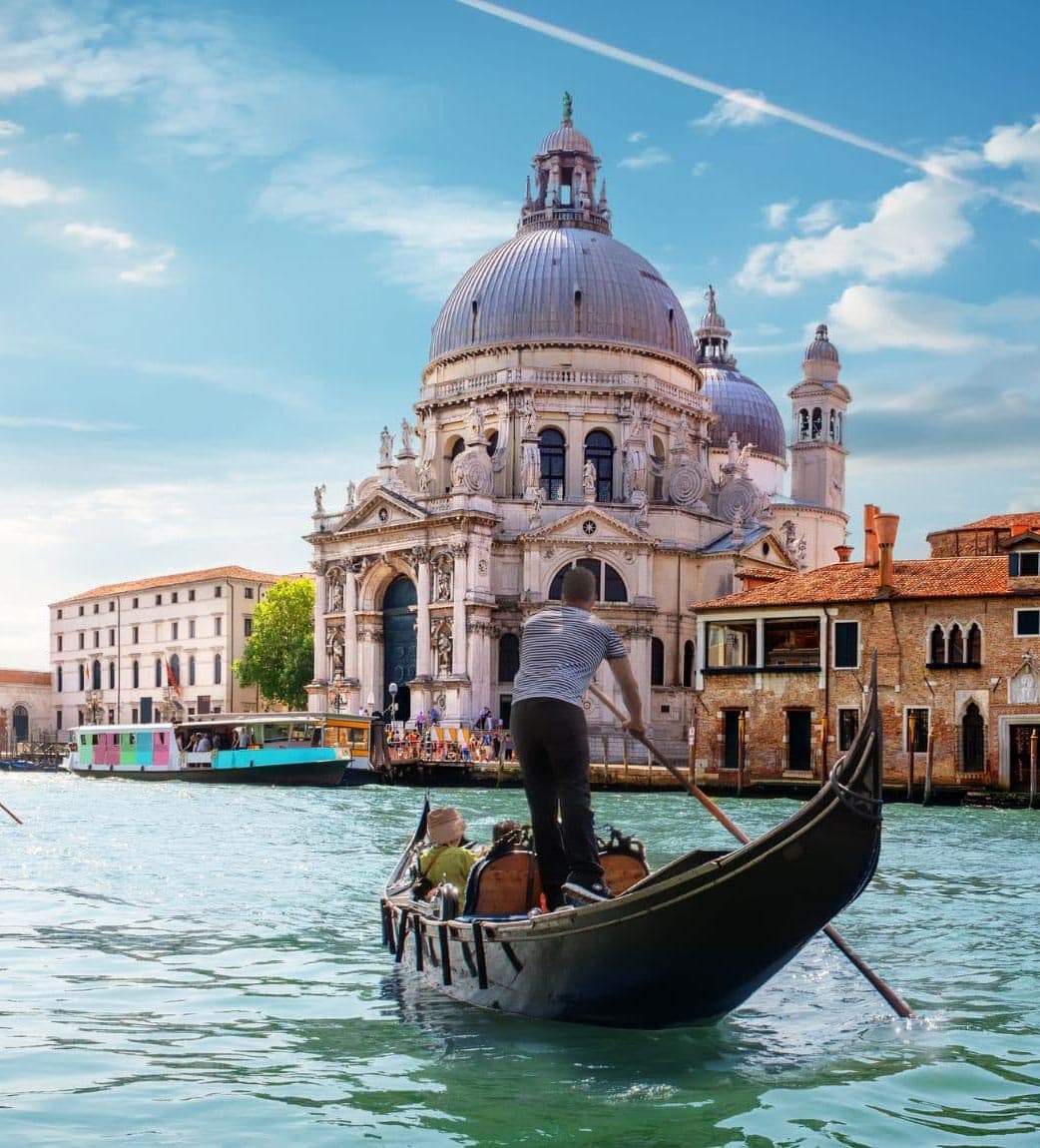
Gondola ride on the Grand Canal near the Rialto Bridge in Venice

Morning: private family guide meets at the hotel. The Palazzo Ducale (children love the armoury and the prison cells accessed via the Ponte dei Sospiri), Basilica di San Marco (the gold mosaics tell stories, which is precisely what keeps a 9-year-old interested), and Piazza San Marco.

Afternoon: private boat to Burano and Murano. Burano’s coloured houses are the most photogenic thing in the Veneto and children will want a photograph in front of every single one. Murano’s glass-blowing demonstration holds a child’s attention for the full twenty minutes, which is about the right amount. The boat ride across the open laguna is part of the experience: wind, water, seabirds, and the skyline of Venezia shrinking behind you.

For families who want more: Ca’ Macana mask-making workshop (children paint their own Carnevale masks, 90 minutes, ages 5+, book ahead). Or a rowing lesson with Row Venice (standing Venetian-style voga, ages 8+, 90 minutes, one of the most unique family experiences in all of Italy).

A note on strollers in Venice: the city has 435 bridges. Almost none have ramps or elevators. A full-size stroller is a liability, not an asset. Bring a BabyZen YoYo or Joolz Aer that folds to cabin-luggage size. For children under 3, a soft carrier (Ergobaby or similar) handles the bridges far better than wheels.

Day 3: Venice to the Dolomites

Lago di Limides with mountain views in the Dolomites, Italy

This is the day that makes the rest of the trip work, and the day that travel forums tell you not to attempt.

Private driver picks up at the hotel (or water taxi to Piazzale Roma, then driver). The drive from Venezia to Cortina d’Ampezzo takes approximately 2 hours 15 minutes via the A27. The landscape changes dramatically once you pass Belluno: flat farmland gives way to vertical rock faces, pine forests, and valleys that look like they were carved by something much larger than a river.

Afternoon options, both spectacular for children:

Lago di Braies: The most photographed lake in the Dolomites. Turquoise water surrounded by vertical cliffs. Rowing boats that children can help paddle (the 7-year-old will want to row, let him). A flat 30-minute walk around the lake that is stroller-friendly and requires zero athletic ability. This is the place where every family takes the photograph that becomes the holiday card.

Alpe di Siusi: Europe’s largest alpine meadow. Cable car from Ortisei to the plateau (children love cable cars, full stop). Easy walking trails through wildflower meadows with cow bells in the background. In September, the light turns golden in the afternoon and the Sassolungo massif glows pink at tramonto.

Hotel: Cristallo in Cortina (5-star, pool, kids’ club, €400 to €700 per night). Rosa Alpina in San Cassiano (Michelin-star restaurant that serves a proper children’s menu, not chicken nuggets, €500 to €900). Hotel La Perla in Corvara (family-run, heated outdoor pool, mountain views from every window, €300 to €500).

The children will sleep early after mountain air. This is by design. And this is why the Dolomites matter: the altitude, the walking, and the fresh air physically reset everyone. The family arrives at the coast the next day rested instead of exhausted from three consecutive days of city walking.

Day 4: Dolomites to Sorrento

Morning free in the mountains. If energy permits: the Cinque Torri hike (short, dramatic rock formations, 45-minute loop, manageable for ages 6+). Or simply breakfast on the terrace with a view of the peaks.

By midday: private driver to Verona Catullo airport (1 hour 30 minutes). Afternoon flight to Naples (1 hour 15 minutes, ITA Airways or easyJet, multiple daily departures). Private driver waiting at Naples airport for the transfer to Sorrento (1 hour via the autostrada, deliberately avoiding the coastal SS163 road with tired children).

The alternative for families who prefer not to fly: private driver from the Dolomites to Venice, then fast train Venice to Naples (5 hours 30 minutes, first class, the restaurant car and the Italian landscape scrolling past will occupy children better than you expect). I recommend the flight for families with children under 10. The time saving is substantial and the children arrive in Sorrento with energy rather than train fatigue.

Hotel in Sorrento: Grand Hotel Excelsior Vittoria (5-star, clifftop above the Marina Piccola, infinity pool overlooking the Bay of Naples, family suites with separate children’s room, €500 to €1,000 per night). Or Hotel Bellevue Syrene (quieter, extraordinary terrace, slightly less kid-oriented but more intimate).

Why Sorrento and not Positano: Positano is beautiful from the water. It is punishing on foot with children. The town is built vertically on a cliff with staircases everywhere. Marina Grande beach requires 300+ steps down and back up with towels, water shoes, and a child who wants to be carried. Sorrento has flat pedestrian streets, a real town centre with shops and gelaterias, public gardens with a playground, multiple family restaurants, and easy ferry access to Capri, Positano, and Amalfi. For families, the answer is always Sorrento.

Day 5: The Amalfi Coast by Boat

This is the day the family will talk about for years. A semi-private gozzo boat tour from Sorrento along the Costiera Amalfitana.

A gozzo is the traditional flat-bottomed wooden boat used by Sorrento fishermen. Your captain (who has been navigating this coast since before you were born) takes you along the cliffs with stops for swimming and snorkelling in coves that are inaccessible by road. The children spend the day jumping off the boat into the Mediterranean, which is precisely the kind of activity that a 7-year-old considers the highlight of any trip to any country.

Stop in Positano: see it from the water (this is the best angle and the one from every photograph), walk up to admire the vertical cascade of pastel houses, walk back down, and appreciate that you are not dragging suitcases up those steps. Stop in Amalfi: the Duomo, gelato, a limoncello shop where the owner lets children taste the lemon cream version.

The boat tour eliminates the SS163 Amalfi Drive entirely. This matters because the coastal road has over 1,000 curves in 50 kilometres and children are highly susceptible to motion sickness. Parents on every travel forum warn about it. The boat solves the problem: zero carsickness, zero traffic, and the children swim between courses at a beach trattoria instead of sitting in the back seat of a car feeling ill.

For families with very young children: request a gozzo with a sun shade and confirm life jackets in small sizes in advance. Water shoes are essential everywhere on the Costiera. The beaches are pebbles, not sand.

If you want lunch on the water: Da Adolfo at Laurito beach is accessible only by boat, serves grilled fish on the terrace, and the children can swim between the primo and the secondo. Book ahead.

Day 6: Capri

Ferry from Sorrento to Capri takes twenty to thirty minutes. The island operates on a different frequency than the mainland: slower, quieter, more fragrant (jasmine and lemon groves line every path).

The Monte Solaro chairlift is the experience children remember. A single-seat open chairlift that rises 589 metres above the town of Anacapri with views across the entire Bay of Naples. Children love it. There is a minimum height requirement, and parents can hold smaller children on their lap. The view from the top is worth the brief nervousness on the ascent.

The Faraglioni rocks by small boat (arrange through the hotel or through IC). Swimming at Marina Piccola, which has calmer water and better access than Marina Grande for families.

Lunch at Da Paolino: dinner under a canopy of lemon trees, famous enough to require booking two to three weeks ahead, but genuinely magical for children who have never eaten outdoors surrounded by hanging lemons. Or Lo Smeraldo near the Marina Grande for simpler, excellent seafood.

Return ferry to Sorrento in the late afternoon. Gelato on the Corso Italia. Early bed.

Day 7: Pompeii, Mozzarella, and the Train to Rome

This is the busiest day of the itinerary and the one that requires the most precise logistics. Italy Charme handles every connection. If you are planning independently, read the timing carefully.

Private driver from Sorrento hotel to Pompeii (30 minutes). Morning at the archaeological site with a family-friendly guide who knows which parts fascinate children: the bakery with 2,000-year-old bread moulds, the thermopolia (ancient fast-food counters), the Cave Canem mosaic (the dog warning that every child finds hilarious), and the amphitheatre. Two hours maximum with kids. Do not attempt three. The site is enormous, largely shadeless, and exhausting in warm weather.

Then the experience that the Martin children rated their favourite of the entire trip: mozzarella making at a fattoria near Pompeii. The children pull the mozzarella themselves from the hot curd, shape it into balls, and eat it warm within minutes. Leo made a mozzarella the size of his head and ate the entire thing. Or: a kids’ cooking class at a traditional Italian farmhouse (pasta, pizza, and tiramistu). Lunch included.

Private driver to Napoli Centrale station. First-class Frecciarossa to Roma Termini (1 hour 10 minutes). Private transfer to Rome hotel.

Hotel: Hotel de Russie (5-star, family suites, secret garden courtyard, between Piazza del Popolo and Piazza di Spagna, €600 to €1,200 per night). Or Six Senses Rome (opened 2023, outstanding children’s programme, wellness-oriented, €700 to €1,500).

Simple dinner near the hotel. Pizzarium Bonci (best pizza al taglio in Roma, the children choose their slices, casual, fast, and genuinely excellent) if you are near the Vatican area. The family has had a full day.

Day 8: Ancient Rome with Kids

Morning: private family-friendly walking tour of Ancient Rome.

The Colosseo with underground ipogeo and arena floor access. This is what makes the visit real for children: they can see where the animals were kept, imagine the mechanics of the trapdoors, and stand on the arena floor where the gladiators fought. Standard tickets do not include the underground. The Full Experience ticket (€24) does, but sells out four to eight weeks in advance. IC secures access to the ipogeo, the arena, and the upper terzo anello.

The Foro Romano, where the guide focuses on daily Roman life rather than emperors: the shops, the public latrines (children find this endlessly entertaining), and the 2,000-year-old graffiti. The Palatino for the views and the sense of scale.

Afternoon: Gladiator School at Gruppo Storico Romano. Children dress in tunics and armour, learn sword techniques with foam weapons, and train as gladiators for two hours. Ages 6+. This is genuinely one of the best family experiences in Rome. Olivia Martin, who had shown minimal interest in Roman history across three museum visits, became completely absorbed for the full session and asked to return the next day.

Alternative afternoon: a gelato tour through Trastevere (three shops, three flavours each, the guide explains the difference between artigianale gelato and the industrial version that tourists eat near the Fontana di Trevi).

Dinner: Armando al Pantheon (classic Roman trattoria, one block from the Pantheon, proper cacio e pepe, local clientele despite the location). Or Roscioli near Campo de’ Fiori for the carbonara made with house-aged guanciale.

Day 9: Rome by Golf Cart, Borghese Gardens, and Pizza Making

Morning: private mini-tour of Rome by golf cart. This is brilliant with children. You cover the Pantheon, Piazza Navona, Fontana di Trevi, Piazza di Spagna, and the Colosseo exterior in 90 minutes without walking. The driver narrates. The children wave at pedestrians. Everyone is happy and nobody’s feet hurt.

Free afternoon at the Borghese Gardens. Rent a rowboat on the lake (the children will argue about who rows, this is normal and correct). Ride the miniature train through the park. Visit the Bioparco zoo if the children need a complete break from history and architecture. Or return to a favourite piazza and do nothing at all.

Evening: private pizza-making and gelato class. A chef comes to a private kitchen (not a tourist cooking school with thirty strangers). The family makes pizza from scratch, including the dough, eats it together, then makes gelato. This experience is consistently rated the favourite evening of the entire trip by families with children under 12. It was for the Martins. Leo’s pizza had roughly four times the recommended quantity of mozzarella and he considered it perfect.

Day 10: Departure

Private transfer from hotel to Fiumicino. If your flight is in the afternoon, you have time for a final colazione at the hotel and a morning in the Borghese Gardens or a slow walk through the centro storico.

James Martin told me at the airport that the trip changed his understanding of what family travel could be. He had expected to survive Italy with children. Instead, they had experienced it. That is the difference between an itinerary designed around adult endurance and one designed around how children actually move through the world.

What We Skip (and Why)

Florence. Brilliant city, but adding it costs a hotel switch and a full travel day. The Dolomites serve the same mid-trip function (landscape counterpoint, pace change) with far more physical activity for children.

Positano as a base. Vertical staircases, no flat ground, beach access that requires 300+ steps. Visit it from the water on Day 5. Sleep in Sorrento.

Cinque Terre. Does not belong in the same trip as the Amalfi Coast. Both are coastal, both involve boats and villages, and combining them creates repetition rather than variety.

Pompeii for more than two hours. The site is enormous and largely without shade. Two hours with a guide who knows the kid-friendly sections is perfect. Three hours and the children are done.

Driving the Amalfi Coast road. Over 1,000 curves in 50 kilometres. Take the boat instead. Your children’s stomachs will thank you.

How Much Does 10 Days in Italy Cost for a Family of Four?

  Independent Travel Self-Guided with Tours Italy Charme Private Experience
Total (family of 4) €5,500-€8,500 €9,000-€14,000 €18,000-€35,000
Per person per day ~€140-€215 ~€225-€350 ~€450-€875
Hotels 3-star, family rooms, self-booked 4-star, family suites, self-booked 4 to 5-star hand-selected hotels with family suites and separate children’s rooms
Venice experience Self-guided, vaporetto, audio guides Group walking tour, 15-25 people Private family guide. Private boat to Burano and Murano. Mask-making or rowing lesson.
Amalfi Coast Public ferry, self-navigated Group boat tour, 20-40 people Private gozzo boat with captain. Swimming stops in hidden coves. Lunch at Da Adolfo.
Rome experience Self-guided, standard Colosseum ticket Group tour with underground access Private archaeologist guide. Underground, arena floor, upper terrace. Gladiator School. Golf cart tour. Private pizza class.
Transfers Public transport, taxi queues, luggage on buses Mix of pre-booked taxis and trains Private water taxi in Venice. Private driver with car seats in every vehicle. First-class trains. Door to door.
Family logistics 12-15 separate bookings across 4 regions, managed by you 8-10 bookings, some logistics still on you Zero bookings. Car seats confirmed for every vehicle. Pacing designed around children. 24/7 Italian contact.

The Martin family’s trip cost approximately $32,000 for four people (flights excluded), which included luxury hotels, all private transfers, private guides, and every experience listed above. That works out to roughly $800 per person per day with every logistical detail handled.

Practical Tips for Italy with Kids

Strollers in Venice: Leave the full-size stroller at home. Venice has 435 bridges with almost no ramps. Bring a lightweight fold-down model (BabyZen YoYo, Joolz Aer) and a soft carrier (Ergobaby) for bridges with younger children. The Dorsoduro and San Marco areas are more navigable than Cannaregio or Castello.

Carsickness on the SS163: The Amalfi Coast road has over 1,000 curves. Children are highly susceptible. The solution: take the boat on Day 5 and avoid the road entirely. If a car ride along the coast is unavoidable, seat children where they can see the horizon, keep windows open, avoid heavy breakfast, and consider anti-nausea wristbands.

Car seats across transport modes: This itinerary crosses water taxis, private cars, trains, planes, ferries, and more private cars. Italy Charme provides car seats in every private vehicle, confirmed in advance by age and weight. For independent travellers: bring a Cosco Scenera NEXT (lightweight, airline-approved, fits in a backpack) or request from each provider individually.

The 4 to 6 PM window: Every day in this itinerary is designed so the intensive activity happens in the morning and the afternoon is free or gentle. This is not accidental. It is the difference between a family that enjoys the trip and one that endures it.

Water shoes: Amalfi Coast beaches are pebbles, not sand. Capri’s Marina Piccola is rocky. Pack water shoes for every family member.

Church dress codes: Knees and shoulders must be covered in all major basiliche and chiese. San Pietro in Rome is the most strictly enforced. Carry a sciarpa or light cardigan in your bag during summer.

Ferragosto (15 August): Much of Italy effectively shuts down around this date. Restaurants close, suppliers go on holiday, and the rhythm of the country changes. If possible, avoid the week of 12 to 20 August for family travel.

Best Time of Year for This Itinerary with Kids

September is ideal. Temperatures range from 20 to 28 degrees Celsius, the sea is still warm enough for swimming, crowds are 40 percent smaller than summer peak, and prices drop 20 to 30 percent. The Dolomites meadows are golden, the vendemmia (grape harvest) begins in Campania, and Italian families have returned to school, which means the museums and beaches belong to you.

Late May and early June are the second choice: warm but not yet hot, long daylight hours, and the flowers in the Dolomites are at their peak.

Avoid July and August if possible. Roma regularly exceeds 35 degrees Celsius, Pompeii has almost no shade, the Amalfi Coast is at maximum capacity, and the Dolomites lose their peaceful character. Ferragosto (15 August) disrupts restaurant and shop schedules across the country.

October works but with caveats: the sea cools, boat tours become weather-dependent, and the Dolomites cable cars begin closing for the season in the second half of the month.

Or Let Us Handle Everything

Children enjoying gelato in Rome, Italy

This itinerary requires 12 to 15 separate bookings across 4 regions, 3 transport modes, and 4 hotels. It involves coordinating private water taxis, drivers, flights, trains, boat tours, cooking classes, and guided experiences for two adults and two children whose energy levels, appetites, and patience change by the hour.

I design this exact trip for families every month. We handle every transfer, every ticket, every prenotazione, and every car seat so you can focus on being a family in Italy rather than managing a family trip to Italy.

What the Italy Charme version includes: a private water taxi from Marco Polo to your Venice hotel, a private family guide for Venice and Burano, a private driver with car seats from Venice to the Dolomites and from the Dolomites to Verona airport, pre-booked flights to Naples, a private driver from Naples to Sorrento, a semi-private gozzo for the Costiera Amalfitana, ferry and restaurant bookings for Capri, a family-friendly guide at Pompeii, mozzarella-making at a fattoria, first-class Frecciarossa tickets to Roma, a private archaeologist for the Colosseum, Gladiator School, a golf cart tour, a private pizza and gelato class, and a local Italian contact available around the clock who knows every shortcut in every city.

Tell us your children’s ages, your travel dates, and what matters most to your family. A destination specialist will respond within 24 hours with a custom version of this itinerary, transparent pricing, and honest recommendations. No obligation, no pressure.


Design My Family Trip →

FAQ – 10 Days in Italy with Kids: Venice, the Dolomites, the Amalfi Coast and Rome

Is 10 days enough for Italy with kids?

Yes, if you choose the right destinations and pace. 10 days allows 2 nights in Venice, 1 night in the Dolomites, 3 nights on the Amalfi Coast, and 3 nights in Rome. The key is front-loading guided experiences in the morning when children have the most energy, and keeping afternoons flexible.

How do you get from the Dolomites to the Amalfi Coast?

Fly. A private driver takes you from the Dolomites to Verona or Venice Marco Polo airport (1.5 to 2 hours). A short flight to Naples (1 hour 15 minutes) followed by a private driver to Sorrento (1 hour) gets you there by late afternoon. The alternative is a 5 to 6 hour train via Venice or Verona to Naples, which works better for older children who enjoy the scenery.

Is Venice good with kids?

Yes, but only if you accept that Venice is a walking city with 435 bridges and almost no elevators. Leave the full-size stroller at home and bring a lightweight fold-down buggy or soft carrier for younger children. The coloured houses of Burano, the glass-blowing in Murano, and the mask-making workshops are among the best family experiences in Italy.

Sorrento or Positano with kids?

Sorrento, always. Positano is beautiful from the water but punishing on foot with children. The town is built vertically on a cliff with staircases everywhere. Marina Grande beach requires 300+ steps down and back up. Sorrento has flat walking streets, a real town centre, public gardens with a playground, and easy ferry access to Capri, Positano, and Amalfi.

Can you combine the Dolomites and the Amalfi Coast in one trip?

Yes, and for families it works better than the standard Rome-Florence-Venice triangle. The Dolomites serve as a mountain reset between the intensity of Venice and the heat of the south. Children burn energy at altitude, sleep well in mountain air, and arrive at the coast refreshed. The key is flying from Verona or Venice to Naples rather than attempting the full overland route.

What is the best time to visit Italy with kids?

September is ideal. Temperatures are 20 to 28 degrees Celsius, crowds are 40 percent smaller than summer, the sea is still warm enough for swimming, and prices are 20 to 30 percent lower. Late May and early June are the second choice. Avoid July and August with children if possible due to extreme heat (35+ in Rome), peak crowds, and Ferragosto closures around 15 August.

How much does a 10-day family trip to Italy cost?

For a family of four, an independent trip costs approximately 5,500 to 8,500 euros. A self-guided trip with private tours at major sites costs 9,000 to 14,000 euros. A fully managed Italy Charme experience with private transfers, first-class trains, luxury hotels, and family-friendly guides costs 18,000 to 35,000 euros. The biggest variables are hotel tier and whether you use private guides and drivers.

Do you need a car in Italy with kids?

Not on this itinerary. Venice is car-free. The Dolomites segment uses a private driver. Sorrento is walkable and boat tours replace driving the Amalfi Coast road (which causes severe carsickness in children). Rome is best explored on foot, by golf cart, or with private transfers. A rental car adds parking stress, ZTL fine risk, and removes the ability for adults to enjoy wine at lunch.

What are the best family experiences in Italy?

The gozzo boat tour along the Amalfi Coast (swimming and snorkelling from a traditional wooden boat), the Gladiator School in Rome (foam sword training in costume, ages 6+), mask-making at Ca’ Macana in Venice (ages 5+), mozzarella making near Pompeii, private pizza and gelato class in Rome, and rowing boats on Lago di Braies in the Dolomites.

Should I visit Rome or Venice first with kids?

Venice first if flying into Marco Polo airport (VCE), which many transatlantic flights serve. Starting north and moving south (Venice, Dolomites, Amalfi, Rome) avoids backtracking and ends in Rome for a Fiumicino departure. The north-to-south flow also follows a natural energy arc: Venice is stimulating but walkable, the Dolomites are restorative, the coast is relaxing, and Rome is the high-energy finale.

Latest Posts

View all