Why Does Florence Reward Slow, Private Exploration?

Four days minimum. Here is why.

I have a theory about Florence that I share with every client who tells me they are planning three days. The theory is this: Florence is not a city you visit. It is a city you read.

Every building is a sentence. The streets are paragraphs. The Medici did not commission art because they loved beauty. They commissioned it because they understood that beauty was the most durable form of propaganda ever invented.

Florence at a Glance
Best Time to Visit April–May and September–October
Recommended Duration 4–5 days (minimum for the Oltrarno and Chianti)
Starting From €400 per person per day
Top Experiences Uffizi with art historian, Oltrarno workshops, Chianti private tastings, Palazzo dinners
Nearest Airport Amerigo Vespucci (FLR): 20 minutes by private transfer. Pisa (PSA): 75 minutes.

I have a theory about Florence that I share with every client who tells me they are planning three days. The theory is this: Florence is not a city you visit. It is a city you read.

Every building is a sentence. The streets are paragraphs. The Medici did not commission art because they loved beauty. They commissioned it because they understood that beauty was the most durable form of propaganda ever invented. Botticelli did not paint Venus rising from the sea because it was a pretty idea. He painted it because Lorenzo de’ Medici needed to make a theological argument to the Pope without putting it in writing. When you stand in front of La nascita di Venere knowing that, the painting becomes something else entirely. Most people who spend ninety minutes in the Uffizi do not know this. They leave convinced they have seen the masterpieces. They have seen the frames.

Consider what the standard Florence visit looks like. Two days. Uffizi in the morning, Accademia in the afternoon, a bistecca in the evening, Ponte Vecchio before checkout. The client arrives home with photographs and a mild cultural fatigue. They have been to Florence the way you can be to an airport: present, but not really there.

What a private guida who has spent twenty years in this city offers is something different. Not just which rooms to enter, but which rooms to sit in. Not just what Brunelleschi built, but why the dome took sixteen years longer than it should have and what that delay tells you about Renaissance politics. Florence is the most thoroughly documented city in human history; the Medici kept records of everything. A guide who can read those records changes the entire experience. The art stops being decoration and starts being evidence.

I should be direct about something. The Uffizi alone, done properly with the time it deserves, requires three to four hours minimum. You cannot see the Uffizi and the Accademia in the same day and do justice to either. I tell this to every client who asks. Some listen. The ones who do not always wish they had.

And then there is the other Florence. Cross the Ponte Vecchio away from the jewellers and walk south into the Oltrarno. The noise drops. The density changes. You are in the Florence that Florentines live in, a neighbourhood of narrow vicoli where the botteghe have not moved in four hundred years. This is where our most distinctive private experiences in Florence take place. No amount of time at the Uffizi prepares you for spending a morning in a working profumeria learning to compose a scent from raw materials that have not changed since the seventeenth century.

What Exclusive Experiences Can You Have in Florence?

Access to places that require no booking platform.

The word esclusivo gets overused in Italian travel marketing. Let me be precise about what it means when I use it. It means access to people, places, and moments that are not listed on any booking platform and that exist only through relationships built over decades.

The Oltrarno Artisan Quarter

The Oltrarno contains more working artisan workshops per square metre than any district in Europe. The number is not an approximation: a 2019 survey by the Comune di Firenze counted 247 active botteghe in the quarter, down from 380 in 1990 but still extraordinary by any comparison. These are not heritage displays. They are operating businesses.

Oltrarno leather artisan workshop Florence private experience

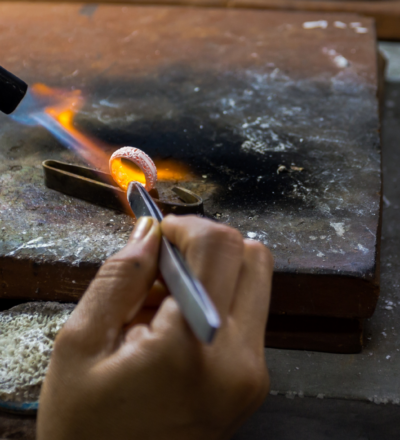
Our Florence craft experiences are built around four distinct Oltrarno traditions. In the gioielleria, you work with a maestro whose family has practised silver filigree, the technique of twisting wire into microscopic lattice patterns, practised since 1887. The silver-wired jewellery workshop (from €800 per person) takes a full morning. You leave with something you made, which is different from leaving with something you bought.

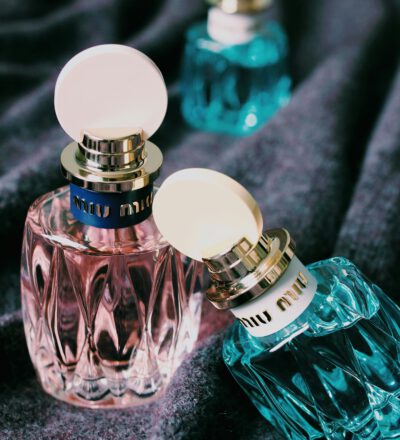
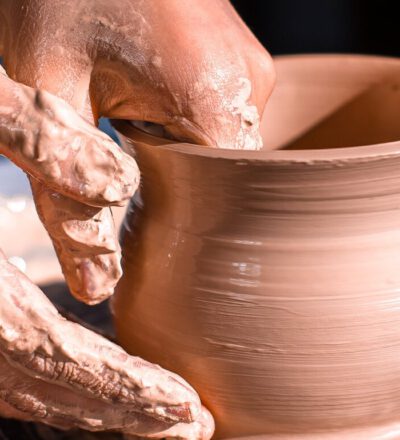
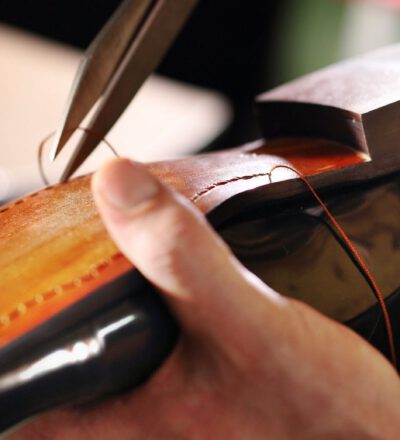
The profumeria is a room without a sign on the door on Via Maggio. Inside, a profumiera who trained in Grasse works from a collection of 340 raw ingredients, some of which have not been commercially available since the nineteen-eighties. The exclusive perfume workshop (from €900 per person) is not a demonstration. It is a composition session. You leave with a scent that does not exist anywhere else. The pottery workshop (from €150 per person) and the calzolaio experience, making a pair of shoes by hand over two sessions (from €700 per person) follow the same principle. The object is secondary to the understanding.

After-Hours Uffizi Access

The Uffizi receives approximately 8,000 visitors per day between April and October. Standard timed entry eliminates the ticket queue but does not reduce the congestion inside. The rooms around the Botticelli corridor, where La Primavera and La nascita di Venere hang, holding roughly 60 people at any given moment during peak hours. You are not looking at the painting. You are looking at the backs of people looking at the painting.

Through our local partners, we arrange after-hours access to the Uffizi: entry after the public has left, with a licensed art historian whose specialisation is Medici patronage and Florentine Renaissance iconography. This is not a tour. It is a private seminar in front of the actual objects. You can stand two metres from La Primavera in complete silence and hear someone explain the argument Botticelli was making. That argument took him three years to compose. It deserves more than the forty seconds the average museum visitor spends in front of it.

Private Palazzo Dinners

Several Florentine families maintain private palazzi in the centro storico, some dating to the fourteenth century. They open their saloni for dinners arranged through personal introduction only. The food is prepared by the family cook, not a catering company. The setting is a single long tavola under original frescoed ceilings. I will not name the families here because naming them would end the arrangement. What I can tell you is that the last dinner we organised in this format included a bottle of Sassicaia from the year the host’s grandmother was born in 1963, and which she selected herself from the family cantina.

Chianti and the Surrounding Castles

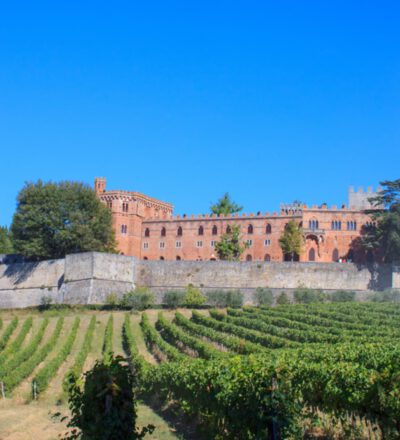
The Chianti Classico zone begins 20 kilometres south of Florence. Most tours visit a single cantina, taste four wines at a long table with seventeen other people, and return to the city in time for dinner. Our Chianti and Castles private experience (from €220 per person) is organised differently. We work with producers who do not appear on Tripadvisor because they prefer to remain unknown to anyone except people who come through personal introduction. One of them makes 4,200 bottles per year and sells them all before harvest. He receives visitors by appointment, with no more than six people at a time, in the cantina where his great-grandfather pressed the same grapes.

For clients who want to extend beyond a day, our Ville Splendida property in Val di Chiana (from €1,900 per person) offers exclusive-use accommodation within a thirty-minute drive of some of the finest Brunello and Rosso di Montepulciano producers in Tuscany. The combination of a Florence base and nights in the Tuscan countryside is, in my experience, the most satisfying structure for a nine to eleven day Italian visit.

How Many Days Do You Need in Florence?

A structure based on twenty years of client visits.

Four days is the minimum for a visit that includes the city properly and at least one day in the surrounding countryside. Five days is better. Clients who tell me they want Florence in two days always tell me afterwards they should have stayed longer.

Here is what the structure looks like in practice, based on how our clients have spent their time over the past twenty years:

Day Focus What changes with a private guide
Day 1 Uffizi (full morning), centro storico on foot After-hours option; Medici iconography in context
Day 2 Accademia (90 min), Palazzo Vecchio, Oltrarno afternoon David without the standard thirty-person group; private salone at Palazzo Vecchio
Day 3 Oltrarno artisan workshop (full morning), Pitti Palace, private palazzo dinner The experience that day-two visitors miss entirely
Day 4 Chianti and the castles, private cantina visit Producers not accessible by standard booking; lunch in a producer’s home
Day 5 Siena or Volterra day trip, or a slower morning in Fiesole The day that separates a visit from a stay

Day three is the day that visitors who leave after two nights never experience. The Oltrarno in the morning, when the botteghe have just opened and the artisans are at the bench before the first customer arrives, is a different city entirely. You see Florence working rather than Florence performing. That distinction is not a small one.

Where Should You Stay in Florence?

By quartiere, with honest downsides included.

Choosing a quartiere in Florence matters as much as choosing a hotel. Each neighbourhood has a distinct character, and none of them is right for everyone. I will give you my assessment of each, including the reasons I sometimes advise clients away from the obvious choices.

Lungarno and Santa Croce offer the best position for walking access to the Uffizi, the Bargello, and Santa Croce itself, which is incidentally the most under-visited major church in Florence and one I consider essential. The Lungarno Collection hotels (the Continentale and the Lungarno itself) are impeccably positioned. The downside is noise. Both Lungarno streets run along the Arno, and the combination of tourist foot traffic and motorini means light sleepers will struggle.

Via Tornabuoni and Piazza della Repubblica is where Florence concentrates its luxury alberghi and its fashion houses in the same few streets. The Four Seasons Firenze sits in a fifteenth-century palazzo on a private garden larger than any park in the centro storico: 4.5 hectares, which is extraordinary in a city this dense. The St Regis is directly on the Arno with Brunelleschi’s original facade. These are the obvious choices, and they are obvious for good reasons. The honest caveat: this area can feel more international than Florentine. The neighbourhood immediately around Via Tornabuoni runs on fashion and finance rather than artisan culture.

Oltrarno is my recommendation for clients who want to experience Florence rather than observe it. The accommodation is smaller and less palatial, but the quartiere is the one that feels like the city Dante and Michelangelo lived in. The Soprarno Suites on Via Maggio is the property I mention most often in this neighbourhood, not for the number of rooms; the owners know every artisan within a ten-minute walk and will arrange introductions that no booking platform offers.

Fiesole, the hill town seven kilometres northeast of Florence, is for clients who want tranquillity above the city. The Belmond Villa San Michele sits in a fifteenth-century monastery whose facade has been attributed to Michelangelo. The attribution is contested by three art historians of my acquaintance, but the view over Florence from the terrazza is not contested by anyone. The practical consideration: you are dependent on a car or a taxi for everything below the hill, which suits some clients and frustrates others.

For clients combining Florence with a longer Tuscany itinerary, our Ville Splendida in Val di Chiana and the Tuscan Monastery near Volterra offer exclusive-use properties that provide a fundamentally different experience from any hotel in the city.

When Is the Best Time to Visit Florence?

The vendemmia, the crowds, and the October light.

The best months are April, May, September, and October. Temperatures sit between 16 and 24 degrees Celsius, the light in the evenings is extraordinary, and the city operates at a pace that allows you to stop. In July and August, Florence receives close to 45,000 visitors per day and daytime temperatures regularly reach 36 degrees. The combination is uncomfortable even with private access and air conditioning.

Season Months Temperature Crowd Level Best For
Spring March–May 12–23°C Medium–High Artisan workshops, outdoor dining, Chianti countryside
Summer June–Aug 24–36°C Very High Evening events, Fiesole concerts, after-hours museum access
Autumn Sep–Nov 14–26°C Medium Vendemmia day trips, truffle season, ideal walking weather
Winter Dec–Feb 4–12°C Low Museums without queues, Uffizi in near silence, hotel prices 30–35% lower

October is the month I recommend most often. The vendemmia brings the Chianti estates alive; the actual harvest, not a staged demonstration. The temperature drops just enough in the evenings to make a long dinner outdoors in a cortile exactly what it should be. The tourist numbers fall by roughly 40 percent from the August peak. You can stand in front of La Primavera with fewer than twelve other people in the room. January and February deserve more credit than they receive. The Uffizi in January takes fifteen minutes to enter, not ninety.

What Are the Best Day Trips from Florence?

Siena before Pisa. Chianti before anything.

Florence is positioned at the centre of Tuscany in a way that makes day trips straightforward. With a private autista, the following are all comfortable:

Siena (75 minutes south) is the day trip I recommend before Pisa. The Piazza del Campo, which slopes at a 1.5-degree gradient, by design, so that the Palio horses can run on it. It is one of the finest civic spaces in Europe. The Duomo di Siena contains Duccio di Buoninsegna’s work in a context that the Uffizi cannot replicate, because you are inside the building it was made for. Siena rewards a full day. Half a day is not enough.

Chianti and the Val d’Elsa (30–50 minutes south) is the day trip I most often design around the Chianti and Castles experience. The combination of a private cantina visit, lunch at a producer’s agriturismo, and a late afternoon at one of the medieval fortified villages (Monteriggioni, Castellina, Radda) produces a day that clients consistently describe as the best of their entire Italy visit. This is the Tuscany that the travel brochures photograph but rarely deliver.

Volterra and San Gimignano (70–90 minutes southwest) suits clients interested in Etruscan history and the pre-Renaissance period that most tours skip. Volterra is a walled town on a volcanic ridge with an Etruscan museum that holds 600 objects the Vatican has been trying to acquire for forty years. San Gimignano’s fourteen surviving medieval towers are the most photographed skyline in Tuscany, and they deserve the photographs. Our Tuscan Monastery property sits 25 minutes from Volterra and makes this circuit considerably more interesting as an overnight extension.

Lucca (45 minutes northwest by car, or one hour by train) is the most underrated city in Tuscany. The Roman amphitheatre in the centro storico was converted into a ring of houses in the medieval period; the oval shape is still perfectly visible from above. The city walls, 4.2 kilometres of them, are intact and wide enough to cycle on top of. Lucca does not receive the same tourist numbers as Siena or San Gimignano, which is precisely why I recommend it.

I will be direct about one trip I do not recommend as a day excursion from Florence: Cinque Terre. The distance is 2.5 hours each way by car or two hours by fast train to La Spezia followed by a local connection. That is four to five hours of transit for three to four hours in the villages. Cinque Terre deserves two days minimum and is far better approached from a base in the Ligurian coast. If it matters to you (and it should), plan it as a separate segment of your Italian journey rather than fitting it between a Florentine breakfast and a Florentine dinner.

Where Should You Eat in Florence?

Specific addresses, not categories.

Florentine cuisine is more severe than Roman cuisine. Less variety. Fewer concessions to international taste. The four dishes that define it are: bistecca alla fiorentina (a T-bone from Chianina cattle, cut no thinner than four centimetres, cooked only to rare, served without sauce of any kind), ribollita (a bread and bean soup that tastes significantly better on the second day, which is the origin of the name), lampredotto (the fourth stomach of the cow, boiled and served in a roll at a lampredottaio stand; a food that Florentines eat with conviction and tourists approach with caution), and cantucci e vin santo for the end of the meal.

My rule for avoiding bad food in Florence is the same as in every Italian city: if a ristorante has a menu in six languages displayed on an outdoor board with photographs, walk past it. The concentration of tourist traps in the streets around the Duomo and the Uffizi is extraordinary. The restaurants that matter are generally two streets away from any major monumento.

For the bistecca, the address is Buca Mario on Piazza degli Ottaviani, the oldest restaurant in Florence, operating since 1886, which is the kind of continuity that means something in a city that takes its traditions as seriously as Firenze does. For ribollita prepared with the seriousness it deserves, Trattoria Sostanza on Via della Porcellana is the reference. The interior has not changed since 1869. Order the ribollita and the burro al limone pasta. Do not deviate.

For the lampredotto, Nerbone in the Mercato Centrale is the address that Florentines use. It is a market stall, not a restaurant. You eat standing. This is the correct way to do it. The experience of eating what the city’s workers have eaten for lunch every day for two centuries, in the place they ate it, tells you more about Florence than another hour in the Uffizi.

For wine, the Oltrarno is the right neighbourhood. The enoteche on Piazza Santo Spirito stock Chianti Classico from producers that the large wine merchants in the centro storico have never heard of. Sit outside in the piazza on a September evening with a glass of Rufina, the Florentine-side Sangiovese that most wine journalists underestimate by about fifteen years of aging potential. Sit with it, in my view, found the exact centre of what Florence is.


Chianti Valley Tuscany private wine tour Italy Charme

Frequently Asked Questions About Visiting Florence

How many days do I need in Florence?
Four days is the minimum for a visit that includes the Uffizi properly, the Accademia, the Oltrarno, and at least a half-day in the surrounding countryside. Five days allows for a full day trip to Siena or Chianti without sacrificing anything in the city. Clients who spend two days in Florence consistently report they should have stayed longer. The city does not compress well.
Is a private tour of the Uffizi Gallery worth it?
Yes, without qualification. The Uffizi holds approximately 1,700 works on permanent display across 101 rooms. A private art historian who specialises in Florentine Renaissance iconography does not add context to what you would otherwise see on your own. They change what you see entirely. After-hours private access, which we arrange for clients, removes the crowd problem completely. Standard timed entry solves the ticket queue; it does not solve the sixty people in the Botticelli corridor.
What is there to do in Florence besides museums?
The Oltrarno artisan quarter is, in my view, the most compelling reason to come to Florence that has nothing to do with a museum. Silver filigree workshops, profumerie, ceramicisti, and calzolai who still practise techniques unchanged since the seventeenth century. Private cantina visits in the Chianti zone 20 kilometres south. Palazzo dinners arranged through personal introduction. Day trips to Siena, Volterra, and Lucca. The food markets at Mercato Centrale and Mercato di Sant’Ambrogio, both worth a morning each.
What is the best neighbourhood to stay in for a luxury visit?
It depends on what you want from the city. For grand hotel elegance and proximity to the major museums, the Lungarno and Via Tornabuoni area. The Four Seasons and the St Regis are the two reference properties. For a neighbourhood that feels like Florence rather than an international city, the Oltrarno. For tranquillity above the city with extraordinary views, Fiesole. Each has an honest downside: the Lungarno is noisy, Via Tornabuoni can feel more fashion capital than Renaissance city, and Fiesole requires a car for everything.
How much does a private guide cost in Florence?
Licensed private guides in Florence charge between €200 and €350 for a half-day (four hours) and €350 to €600 for a full day, depending on specialisation and season. Art historians with advanced credentials in Florentine Renaissance iconography command the higher end of those tariffe. When you book through Italy Charme, guide fees, all museum tickets, private trasferimenti, and restaurant prenotazioni are included in your daily rate. Our Florence journeys start from €400 per person per day.
What are the best day trips from Florence?
Siena (75 minutes south, and a better full-day trip than Pisa), Chianti private cantina visits (30–50 minutes south), Volterra and San Gimignano combined (90 minutes southwest), and Lucca (45 minutes northwest, the most underrated city in Tuscany). What I do not recommend as a day trip: Cinque Terre. The return journey takes four to five hours of transit for too few hours in the villages. Plan it as a separate trip.
Is Florence a good destination for a honeymoon?
Florence is the most naturally romantic city in Italy after Venice, and it has the considerable advantage of being easier to move around. A private palazzo dinner, an after-hours Uffizi visit, an Oltrarno perfume workshop where you compose a scent together, and nights at Fiesole with that view over the cupola. These are the elements of a Florentine honeymoon that no resort can replicate. We design these journeys regularly. They work.
What traditional Florentine dishes should I try?
The four non-negotiable dishes are bistecca alla fiorentina (Chianina T-bone, minimum four centimetres thick, only rare), ribollita (bread and bean soup, always better the second day), lampredotto (the fourth stomach of the cow, served in a roll at a market stand; this is what Florentines eat for lunch), and cantucci e vin santo to finish. Beyond these: pappa al pomodoro, fagioli all’uccelletto, and the trippa alla fiorentina that Nerbone in the Mercato Centrale has been making from the same recipe since the market opened in 1874.
Do I need to book the Uffizi and Accademia in advance?
Yes, and further in advance than most people expect. Between April and October, Uffizi timed entry tickets sell out two to four weeks ahead on the official booking platform. The Accademia runs a strict capacity system and popular time slots go three to five weeks out during peak season. In January and February, walk-in entry is generally possible at both. When you travel with Italy Charme, all prenotazioni are handled as part of the planning process. You arrive knowing your entry time and your guide is already there.
Can I combine Florence with the Tuscan countryside?
This is the structure I recommend most often for a nine to eleven day Italy visit. Three to four nights in Florence for the city itself, followed by three to four nights in an exclusive-use property in the Tuscan countryside. Our Ville Splendida in Val di Chiana sits at the centre of the Brunello, Montepulciano, and Chianti Classico zones, 90 minutes south of Florence. The combination of city and countryside within a single journey is what Tuscany does better than any region in Italy.