Veneto at a Glance
Best Time to Visit April–June and September–October. Arena opera season June–September. Vendemmia September–October for wine country.
Recommended Duration 7–10 days to explore the region properly. Venice alone deserves 2–3 nights.
Starting From €120 per person (Kayak in Venice). Secret Veneto tour from €5,900/pp.
Top Experiences Venetian boatbuilding at a squero, opera at the Arena di Verona, privately owned Palladian villa visit, Scrovegni Chapel with advance booking, Amarone in Valpolicella
UNESCO Sites Venice (1987), Verona (2000), Vicenza and Palladian Villas (1994–1996), Prosecco Hills (2019), Dolomites (2009)
Getting There Venice Marco Polo (VCE), ~20 min from city. Verona (VRN) for western Veneto. High-speed train: Venice–Milan 2h15, Venice–Rome 3h30.

Why Veneto Is More Than Venice

Five UNESCO sites. Italy’s most visited region. Almost none of it explored.

Veneto is the most visited region in Italy by total tourist arrivals. That is almost entirely because of Venice, and Venice is covered on its own page at our Venice destination. What I want to talk about here is everything else.

The region stretches from the Dolomites in the north to the Adriatic coast in the east, from the shores of Lake Garda to the Venetian lagoon. Seven provinces. The western part of the Veneto was the Terraferma, the mainland empire that the Venetian Republic ruled for four centuries, and the traces of that dominion are everywhere: in the Palladian villas the Venetian nobility built across the countryside, in the Roman infrastructure that predated Venice entirely, in the food culture that is Venetian in origin but distinct from anything in the lagoon. The Venetian Republic shaped this region for 500 years. Then it fell in 1797 to Napoleon, who passed it to Austria, who held it until 1866. That layered history is what gives Veneto its particular character.

Five UNESCO World Heritage Sites touch this region. Venice itself (1987). The city of Verona (2000). The city of Vicenza and the 24 Palladian villas scattered across the Veneto countryside (1994, extended 1996). The Prosecco Hills of Conegliano and Valdobbiadene (2019). And the Dolomites (2009), whose southern flanks belong to Belluno province. Most countries have fewer than five UNESCO sites in total. Veneto contains that many within a two-hour drive.

Our Secret Veneto tour (€5,900/pp) was built precisely because the standard itinerary misses almost everything. The experiences I will describe below exist because of relationships we have built over twenty years. Some require an introduction. All of them are better than anything you will find by searching.

Verona: Opera, Amarone, and 2,000 Years of History

The Arena was built c. 30 AD. It still seats 22,000 for summer opera.

Verona became a UNESCO World Heritage city in 2000, and it deserves the designation in a way that not every UNESCO city does. The Arena di Verona was built around 30 AD and is the third-best-preserved Roman amphitheatre in the world. It originally held around 30,000 people; it seats 22,000 today for performances. Every summer from June through September, the Arena hosts one of the world’s most atmospheric opera seasons: Aida, Nabucco, La Traviata, performed under a sky that is either dark blue or full of stars, in a space that was already old when the first performances happened here. The acoustics were not designed for opera. They work anyway, with extraordinary force.

Verona is also Romeo and Juliet country, which I mention not because the story is true (it is fiction; Shakespeare never visited Italy) but because Verona has turned a fictional association into one of its primary cultural industries. The Casa di Giulietta with its famous balcony is a 14th century building that was chosen retroactively. None of this matters when you are standing in the Piazza delle Erbe at seven in the evening, which was built on the old Roman forum and remains one of the most beautiful city squares in Italy. The building is fictional. The piazza is not.

West of Verona, the Valpolicella wine zone produces Amarone della Valpolicella DOCG. The process is called appassimento: Corvina Veronese grapes (and two other varieties) are harvested in September and then laid on bamboo racks in ventilated lofts to dry for three to four months, concentrating their sugars. The resulting wine is fermented dry, reaching 15% alcohol or more, and must age for a minimum of two years before release. A Riserva ages for four. Premium bottles run from €50 to €200 and above. This is not a wine designed for a Tuesday evening. It is a wine for a specific occasion, and having it in Valpolicella with someone who made it is the specific occasion I recommend. Ripasso is the lighter sibling: wine refermented over the dried grape skins left from Amarone production. More approachable, considerably less expensive, and a genuine Veronese institution in its own right.

Palladio and Vicenza: The Architect Who Built America

Thomas Jefferson called Palladio’s Four Books his “Bible.” Monticello is a Veneto villa.

Andrea Palladio was born in Padua in 1508 and spent most of his working life in Vicenza. He died in 1580. In 2010, the US Congress passed Resolution No. 259 formally naming him the “Father of American Architecture.” Thomas Jefferson called Palladio’s *Four Books of Architecture* his “Bible” and designed Monticello as a direct interpretation of the Villa La Rotonda. The White House, the US Capitol, virtually every significant neoclassical public building in the United States derives from Palladio’s ideas about proportion, symmetry, and the relationship between a building and its landscape. It all comes from the hills around Vicenza.

Villa La Rotonda (Villa Almerico Capra), begun around 1567, is the canonical example. Four identical facades, each with a classical portico. A central domed hall. Complete symmetry in every direction. It sits on a hill above Vicenza and looks across the countryside in all four directions simultaneously. It is also privately owned, and access requires advance arrangement. Villa Barbaro at Maser, one hour east, combines Palladio’s architecture with a complete interior fresco cycle by Paolo Veronese: trompe-l’oeil figures appearing at doorways, mythological scenes across the ceilings, the Venetian patron family painted life-size into the walls of their own home. The collaboration between two of the greatest artists of the 16th century, in a building that has barely been touched since.

The Teatro Olimpico in Vicenza is the oldest surviving indoor theatre in the world, completed 1585 (Palladio began it in 1580 and died before completion; Vincenzo Scamozzi finished the stage). The permanent trompe-l’oeil stage set representing seven streets of ancient Thebes has never been removed. The theatre is still used for performances. Twenty-four Palladian villas across the Veneto are UNESCO-listed; the majority remain in private family ownership. Access to them as something other than a ticketed monument requires a personal relationship with the owners. This is precisely what our Meeting an Aristocratic Family experience (€600/pp) was designed to provide.

Padua: Giotto, Galileo, and the World’s First University Degree

25 visitors per 15-minute slot. Book the Scrovegni Chapel months in advance.

Padua sits 30 minutes west of Venice by train. Most visitors on a day trip see the Basilica di Sant’Antonio (Il Santo), the major Catholic pilgrimage church with Donatello’s bronze statues, and the Prato della Valle, a 90,000-square-metre elliptical square lined with 78 statues that is one of the largest city squares in Europe. These are worth an afternoon. The Cappella degli Scrovegni is worth the entire trip.

Giotto painted the Scrovegni Chapel between 1303 and 1305. The fresco cycle covering all four walls and the ceiling is considered the moment Western art became human: faces with individual emotions, figures with physical weight, narrative with psychological depth. Everything that painting became in the following seven centuries traces back to this room. The chapel admits 25 people per 15-minute slot. Book months in advance. The restriction exists because the frescoes are sensitive to humidity and carbon dioxide, and the chapel management is serious about preserving them. If you cannot get the standard booking, we can sometimes locate access through institutional arrangements. We handle this as part of every Veneto itinerary that includes Padua.

The University of Padua was founded in 1222, making it one of the oldest universities in the world. Galileo taught here from 1592 to 1610 and called these “the happiest 18 years of my life.” The university built the first permanent anatomical theatre in the world in 1594 (the Teatro Anatomico at the Palazzo del Bo, still intact). In 1678, Elena Cornaro Piscopia became the first woman to earn a university degree anywhere in the world, at Padua, in philosophy. The building where this happened is still in use.

The Wines of Veneto: From Prosecco Hills to Amarone Country

Veneto produces more classified wine than any other Italian region.

Veneto produces more DOC and DOCG wine than any other region in Italy. The range runs from the lightest Prosecco to the most serious Amarone, and most of it falls between: Valpolicella, Ripasso, Soave, Bardolino, and dozens of smaller designations tied to specific valleys and hillsides across the region.

The Prosecco Hills of Conegliano and Valdobbiadene received UNESCO World Heritage status in 2019. The designation covers a landscape of steep, narrow vineyard terraces between two small towns in the Treviso hills, northeast of Venice. Within this zone, the Cartizze subzone, 107 hectares divided among more than 100 growers, produces the most prestigious single-vineyard Prosecco. The terrain is so steep that the harvest is done entirely by hand. A Cartizze Prosecco is a different category from what most people associate with the name.

Amarone I have described in the Verona section. The Soave DOC zone, east of Verona, produces white wine from volcanic basalt soils on the hillsides around the medieval village of Soave. The soil gives the wine a mineral quality that is specific and identifiable. Bardolino, from the shores of Lake Garda, is a light red that has been produced since the Romans settled here: easy, pleasant, and best drunk in a restaurant on the lakeside on a warm evening rather than analysed.

A word on the Spritz. The aperitivo that now appears in every bar in the world originated in the Veneto during the Austrian occupation (the Kingdom of Lombardy-Venetia, 1815–1866). Austrian soldiers found the local wine too strong and added water to dilute it. “Spritzen” means to spray or splash in German. Over time the water was replaced with soda water, then sparkling white wine, then Aperol or Campari. The Veneto version predates the orange formulation by a century.

Our Slow Food Farmer Experience (€350/pp) and Slow Food Experience (€190/pp) both route through producers who treat wine and food as the same conversation. The Gardens and Gourmet Tour (€4,800/pp) combines the villa circuit with the wine country in a single itinerary.

The Craftsmanship Layer: What We Offer That No One Else Does

Ten Veneto experiences. More than any other destination we offer.

Italy Charme has ten experiences in Veneto, more than in any other destination we cover. That number reflects twenty years of building relationships with craftspeople, farmers, aristocratic families, and artisans who do not list their workshops on any platform and do not appear in any guidebook. These are the people we send our clients to.

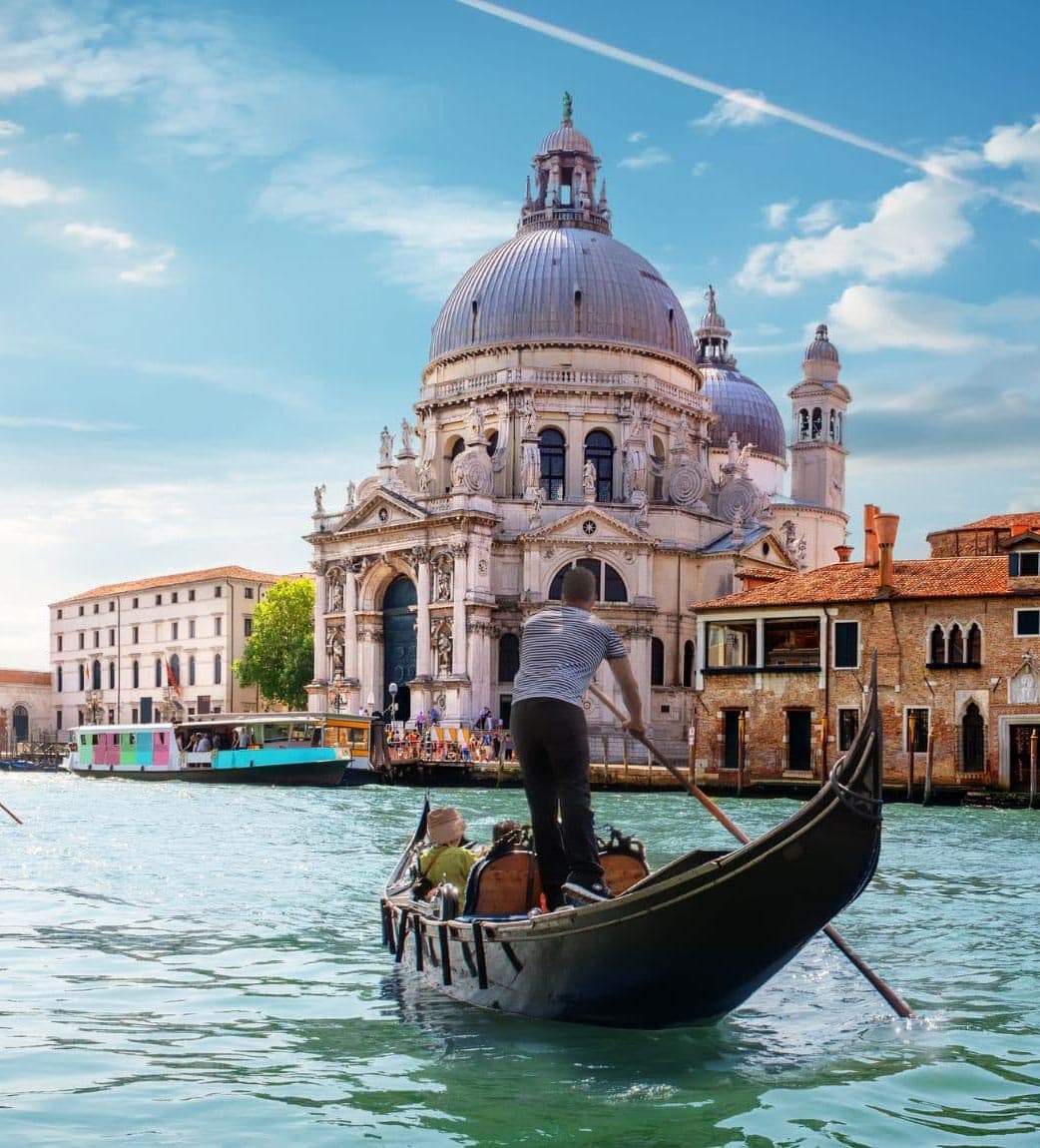
The gondola has 280 components and is made from eight types of wood. The left side of the hull is 24 centimetres wider than the right, a deliberate asymmetry that compensates for the gondolier’s single-oar stroke from the starboard side. There are fewer than 500 gondolas in Venice today, and each is built at one of the remaining squeri (boatbuilding yards), where master craftsmen have been working by hand for generations. Our Venetian Boatbuilding experience (€800/pp) takes you into a working squero to spend a day with the people who keep this craft alive. The companion experience, the Gondola Workshop (€350/pp), provides a shorter introduction to the same tradition.

The Art of Venetian Tailoring (€800/pp) connects clients with the artisans who maintain a tailoring tradition distinct from Milan and Naples: lighter construction, more relaxed, rooted in the merchant and maritime culture that dressed differently from the court cities. A Journey into the Heart of Herbal Craftsmanship (€600/pp) draws on the Benedictine monastery traditions that have produced medicinal and culinary herbal preparations in the Veneto for centuries.

The Caviar Immersion Experience (€350/pp) is the one that surprises people most. Caviar production in northern Italy, specifically in the Po Delta area and river systems of the Veneto, has produced some of the finest sturgeon caviar in Europe. The experience goes directly to the producer. Traditional Italian Cheesemaking (€190/pp) and Kayak in Venice (€120/pp) cover opposite ends of the experience spectrum: one puts you in a farmhouse, the other puts you on the water at dawn in the Venetian lagoon, in a kayak, before the day-trippers arrive.

What to Eat in Veneto

Tiramisù was born in Treviso around 1970. Baccalà alla vicentina traces to a 1432 shipwreck in Norway.

Tiramisù was created at Le Beccherie restaurant in Treviso, around 1970, by the owner’s wife Alba Campeol and pastry chef Roberto Linguanotto. According to the origin account, Linguanotto accidentally dropped mascarpone into a bowl of eggs and sugar, and the result became the foundation of a new dessert. Friuli-Venezia Giulia disputes the Veneto claim and registered a competing version in 2017. Veneto registered tiramisù as a regional product in 2024. The debate is genuine and ongoing. Treviso is 30 kilometres north of Venice and produces a tiramisù that tastes like the original, which it may or may not be.

Baccalà alla vicentina is made from stockfish, not salt cod, despite what the name suggests. In the Vicentine dialect, “bacalà” (one C) refers to air-dried cod from Norway. The tradition dates to 1432, when Venetian sea captain Pietro Querini was shipwrecked near Norway’s Lofoten Islands on a trading voyage and survived by eating the dried cod the locals stored for winter. He brought the preservation technique back to Venice, and the ingredient eventually became central to the Vicentine table. The dish is salt cod soaked for several days, then slow-cooked for hours in olive oil and milk with anchovies, onions, Parmigiano, and parsley, until it becomes an unctuous, intensely savoury thing that has almost no relationship to what the name sounds like.

Radicchio di Treviso IGP, the bitter red chicory with white ribs, grows in the Treviso province from October through March. The late harvest variety, harvested when the outer leaves have died back and only the inner heart remains, is considered one of the great winter vegetables of Italian cuisine. Bigoli is the traditional Veneto pasta: thick, rough, whole-wheat, extruded through a press rather than rolled. It takes sauces differently from standard egg pasta. Asiago DOP comes from the plateau of the same name in Vicenza province; Monte Veronese DOP from the alpine pastures of Verona province. Both are genuine mountain cheeses with a character tied to specific altitude and specific grass.

The Dolomites: UNESCO World Heritage in the Veneto’s Own Backyard

Cortina d’Ampezzo hosted the 1956 Olympics. The 2026 closing ceremony was held at the Arena di Verona.

The Dolomites received UNESCO World Heritage status in 2009. The southern Dolomites, in Belluno province, are part of the Veneto. The rock formations here, a pale limestone that turns orange and then deep red at sunset, produce a landscape of a different order from the Alps: more vertical, more dramatic, more alien. The Tre Cime di Lavaredo, three distinctive rock towers rising from a plateau above 2,000 metres, are the most photographed formation. The walk around their base takes three to four hours and is accessible to anyone in reasonable condition.

Cortina d’Ampezzo is Italy’s most established ski resort, positioned in a bowl of mountains in the Dolomites at 1,224 metres. It hosted the 1956 Winter Olympics. It co-hosted the 2026 Winter Olympics with Milan (the Games concluded in February 2026), and the closing ceremony was held at the Arena di Verona, a connection between the ancient amphitheatre and the alpine venue that felt entirely Venetian in its logic.

For clients combining Veneto with Milan and the northern circuit, the Dolomites are a two-hour drive from Venice and a natural extension of a week-long itinerary.

When Is the Best Time to Visit Veneto?

May, June, and September are the three months I recommend without qualification.

May and June offer ideal conditions across the entire region: temperatures between 18 and 25°C, the Arena opera season just beginning in mid-June, the vineyards in full leaf. September is the other peak: the vendemmia is underway in Valpolicella and the Prosecco Hills, the Arena season reaches its final performances, and the early autumn light on the Dolomites and Palladian villas is worth the trip on its own. October extends the wine country season and brings the Dolomites into autumn colour.

Month Temperature Crowd Level Best For
January 2–7°C Very Low Veneto without the crowds, wine cellars, Dolomites skiing
February 3–9°C Medium Carnevale in Venice. Dolomites ski peak. Acqua alta season ending.
March 7–14°C Low Early spring, villas reopening, vineyards beginning to bud
April 11–18°C Medium Easter, Verona in spring, manageable crowds at villas
May ★ 15–23°C Medium Ideal weather, vineyards in leaf, villas at their best
June ★ 19–27°C Medium-High Arena opera season opens. Long evenings. Good weather throughout.
July 22–30°C Very High Arena opera at peak. Venice at 35°C and maximum crowds.
August 22–31°C Extreme Avoid Venice. Verona and the countryside are more manageable.
September ★ 18–26°C Medium Vendemmia in Valpolicella and Prosecco Hills. Arena final performances. Best month overall.
October 13–20°C Low-Medium Wine country at harvest, Dolomites autumn colour, radicchio season beginning
November 7–13°C Low Acqua alta season in Venice. Wine cellars most welcoming. Quiet galleries everywhere.
December 3–8°C Low-Medium Christmas markets in Verona and Venice. Dolomites ski season opening.

For honeymoon clients, my recommendation is late May or early October: the crowds have either not yet arrived or have largely gone, the light is at its best for the Palladian villas, and there is a quiet to the Veneto countryside in those months that Venice, for all its extraordinary qualities, cannot match.

roman arches of the Arena di Verona, Italy Charme private experiences

Frequently Asked Questions About Visiting Veneto

Is Veneto worth visiting beyond Venice?
Veneto has five UNESCO World Heritage Sites: Venice, Verona, Vicenza and its Palladian villas, the Prosecco Hills, and the Dolomites. Most visitors see the first one and leave. Those who move beyond the lagoon find a Roman amphitheatre still hosting opera, Giotto frescoes restricted to 25 viewers at a time, vineyard landscapes that became UNESCO for their beauty, and artisan traditions that have no equivalent elsewhere in Italy. Our Secret Veneto tour (€5,900/pp) was built because the standard itinerary misses almost everything that makes this region worth the journey.
How many days do I need to explore Veneto?
Venice alone deserves 2 to 3 nights. To explore the wider region properly: Verona and Valpolicella, a Palladian villa circuit, Padua and the Scrovegni Chapel, the Prosecco Hills. Plan 7 to 10 days minimum. The cities are close: Verona is 90 minutes from Venice by high-speed train, Padua is 30 minutes. But each deserves a full day rather than a rushed afternoon. The Veneto is a region that rewards a slow approach, which is exactly how we build our itineraries.
What wine is Veneto famous for?
Veneto produces more classified wine than any other Italian region. The most prestigious is Amarone della Valpolicella DOCG: made from dried Corvina grapes (appassimento), 15%+ alcohol, aged minimum two years, premium bottles €50–200+. Ripasso is the lighter Valpolicella variant. Prosecco comes from the UNESCO-listed hills between Conegliano and Valdobbiadene, with the 107-hectare Cartizze zone as the finest single-vineyard expression. Soave (white, volcanic soils) and Bardolino (light red, Lake Garda shores) complete the main appellations. The Spritz, consumed everywhere, was invented here during the Austrian occupation.
What is Amarone wine?
Amarone della Valpolicella DOCG is produced by the appassimento method: harvested grapes (primarily Corvina Veronese) are laid on bamboo racks in ventilated lofts for three to four months to dry and concentrate. The dried grapes are then pressed and fermented to dryness, producing a wine of 15% alcohol or more. Minimum aging requirement is two years before release (four for Riserva). The result is rich, complex, structured, and age-worthy. A bottle opened ten years after the vintage is a different wine from one opened at release. This is not a style for casual drinking: it is the reason to have it at the source, with the producer who made it.
What are the Palladian Villas?
Andrea Palladio (1508–1580), born in Padua and based in Vicenza, designed the country villas that the Venetian nobility built across the Terraferma from the mid-16th century onward. Twenty-four of these villas are UNESCO World Heritage listed (part of the 1994 designation for Vicenza, extended 1996). Thomas Jefferson considered Palladio’s Four Books of Architecture his “Bible”; Monticello is a direct interpretation of Villa La Rotonda. Most villas remain in private family ownership. Access to them as something more than a ticketed monument requires a personal introduction, which is what our Meeting an Aristocratic Family experience (€600/pp) provides.
When is the Verona opera season?
The Arena di Verona opera season runs from mid-June through early September each year. The programme typically includes Aida, Nabucco, La Traviata, and one or two additional productions, with each opera performed multiple times across the season. The Arena seats 22,000 under an open sky; performances begin at sunset and continue into the night. Book well in advance for peak summer dates. An opera at the Arena is one of the most one of the most atmospheric events in Italian cultural life: a Roman amphitheatre built in 30 AD, full of people from across the world, watching Verdi under the stars.
What is the best time to visit Veneto?
May, June, and September without qualification. May and June offer ideal temperatures (18–27°C), manageable crowds, and the Arena season just beginning. September brings the vendemmia in Valpolicella and the Prosecco Hills, the final Arena performances, and some of the best light of the year on the Dolomites and Palladian villas. October extends the wine country season with slightly cooler temperatures. July and August are manageable in the countryside and Dolomites but should be avoided in Venice specifically. The region does not shut down in winter; it returns to itself.
What food is Veneto known for?
Tiramisù was born at Le Beccherie in Treviso around 1970. Baccalà alla vicentina traces to 1432 and a shipwrecked Venetian captain who brought stockfish back from Norway. Bigoli is the thick whole-wheat pasta of the Veneto. Radicchio di Treviso IGP is the distinctive bitter chicory harvested in winter. Asiago DOP and Monte Veronese DOP are the regional cheeses. The Spritz originated here during the Austrian occupation. The cicchetti culture of Venice deserves its own section (covered on our Venice destination page), but the food of the mainland Veneto is less well-known and, in many respects, more interesting for a visitor who wants to eat as a Venetian eats.
How do I visit the Scrovegni Chapel in Padua?
Book as early as possible through the official Cappella degli Scrovegni website. The chapel admits 25 visitors per 15-minute slot; tickets sell out months in advance for peak season visits. Standard tickets include 15 minutes in a climate-controlled acclimatisation room followed by 15 minutes in the chapel. The restriction exists to protect Giotto’s frescoes from humidity and carbon dioxide damage. If standard tickets are unavailable, we can sometimes locate access through institutional allocations held by authorised operators. We handle this as part of every Veneto itinerary that includes Padua. The Scrovegni Chapel has the same booking urgency as Milan’s Last Supper. Treat it accordingly.
Are the Dolomites in Veneto?
Yes, partially. The Dolomites span five Italian provinces across three regions. The southernmost section, in Belluno province, falls within the Veneto. The Dolomites received UNESCO World Heritage status in 2009. Cortina d’Ampezzo, Italy’s most established ski resort and the host of the 1956 Winter Olympics, is in Belluno province. It co-hosted the 2026 Winter Olympics with Milan, with the closing ceremony held at the Arena di Verona. From Venice, the Dolomites are roughly two hours by car, making them accessible as a two-night extension of a Veneto itinerary rather than a separate trip.